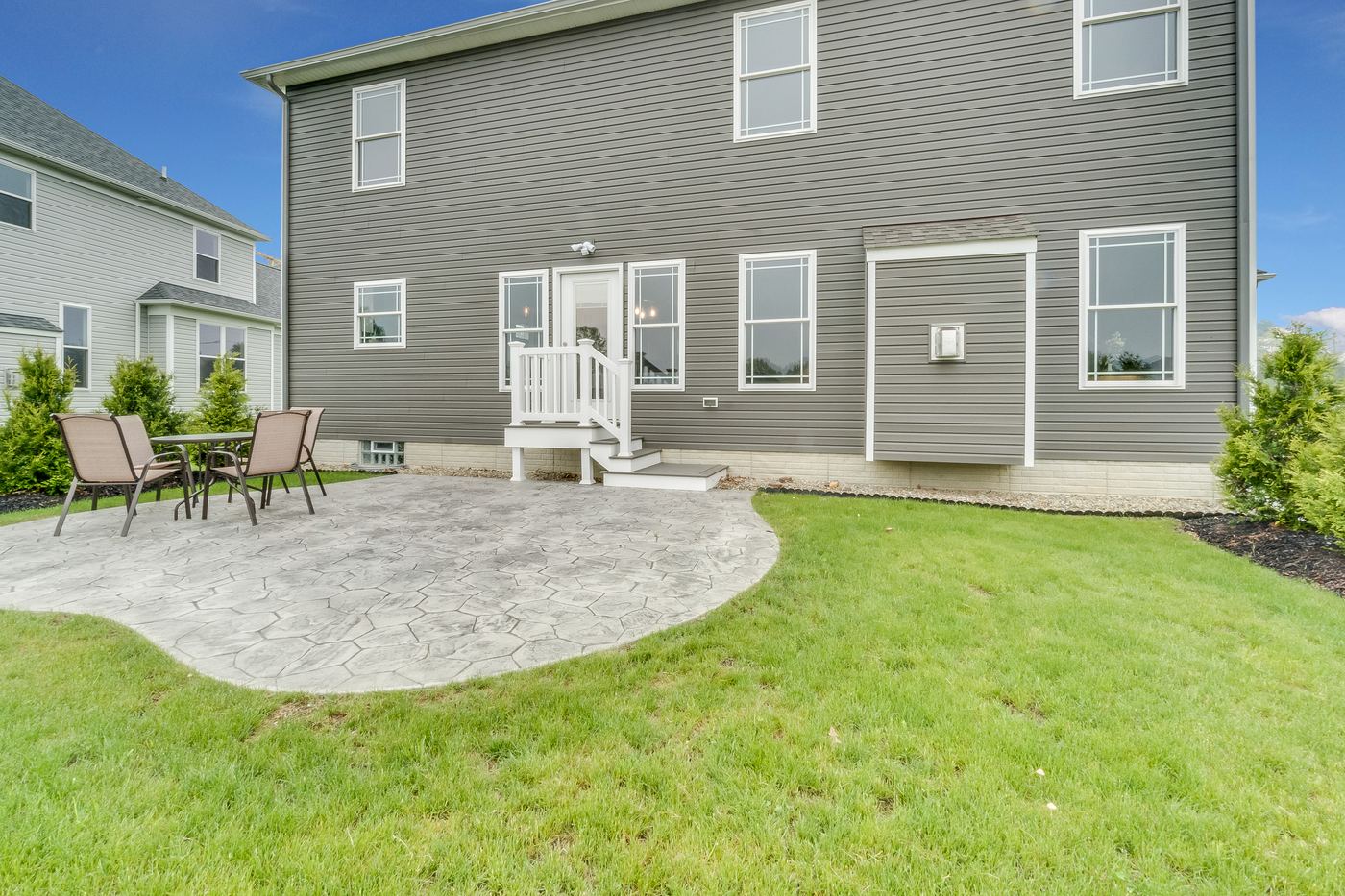
Why do concrete patios crack in Colorado Springs?
Three forces do most of the damage. All concrete shrinks as it cures, so some cracking is normal and the job of the joints is to decide where it happens. Water is the second. It soaks into the soil under the slab, freezes, expands and lifts the concrete, then lets it drop when it thaws. Colorado Springs winters cross the freezing line again and again between fall and spring, so that cycle repeats all season. The third force is the soil itself. Much of the ground here is clay that swells when it gets wet. When one side of a slab is lifted more than the other, the concrete bends and breaks. The fix is the work you never see after the pour: base depth, separation fabric, compaction, reinforcement and drainage.
What is frost heave, and why does the base matter?
Frost heave happens when water in the ground freezes and grows. Fine soils like silt and clay hold water, so they heave hardest. A patio slab does not sit below the frost line. The pier detail in the Pikes Peak Regional Building Department's patio cover handout sits 30 inches below grade, and no patio slab goes that deep. A slab is a floating surface, so its defense is a layer of compacted gravel between the concrete and the native soil. Gravel drains instead of holding water, and once it is compacted it gives the slab even support across its whole footprint. Even support is the point. A slab that rises and falls as one piece survives. A slab that rises in one corner and stays put in another cracks.
Does Colorado Springs soil make cracking worse?
Often, yes. The Colorado Geological Survey calls expansive soil the most significant geologic hazard in the state and reports that clay soils around Colorado Springs and Pueblo are typically expansive to some degree. Some of the bedrock under the area, including the Pierre Shale and Dawson claystone, can have moderate to very high swell potential. The damage comes from uneven moisture. Wet soil near a downspout or a sprinkler line swells while dry soil a few feet away does not, and the slab across both gets bent. CGS case files include a patio slab broken by roughly three inches of heave. You can control the water. Point downspouts away from the patio, keep sprinkler heads from spraying the slab edge, and make sure the finished surface sheds water away from the house.
How deep should a patio base be in Colorado Springs?
Ask any contractor for the total depth below grade, then ask what each layer is. Apex publishes its numbers. The Solid tier is 7 inches total below grade: a 4-inch slab at 4,000 PSI over a 3-inch compacted base of recycled gravel and concrete powder, on non-woven geotextile and compacted native soil. The Stronghold tier is 11 inches total: a 5-inch fiber-reinforced slab at 4,500 PSI over a 6-inch compacted gravel base and non-woven geotextile. Both carry a #4 rebar grid at 12 inches on center and a 2-year structural warranty. The third tier, Bulletproof, uses a proprietary foundation system with a lifetime structural warranty, and Apex explains it at the consultation. Whatever quote you hold, if it does not say how deep the base is, what it is made of and how it is compacted, you are comparing finishes and guessing about the rest.
What does geotextile fabric do under a patio?
A non-woven geotextile is a felt-like fabric laid on the compacted native soil before the gravel goes down. Its main job is separation. Without it, fine clay and silt from below slowly work up into the gravel, and the gravel gets pushed down into the soft soil under load. Either way the base gets thinner and starts holding water, which is exactly what the base was there to prevent. Transportation agencies use the same fabric under roads for the same reason: it keeps soil from migrating into drainage aggregate while still letting water pass through. On a patio it protects the 3 or 6 inches of compacted gravel you paid for so it stays 3 or 6 inches of clean, draining gravel for years. If a quote does not mention it, ask.
Does rebar stop concrete from cracking?
No reinforcement prevents every crack, and anyone who says otherwise is selling. Rebar does its work after a crack forms. It holds the two sides tight and level, so a hairline stays a hairline and one half of the slab does not drop or lift away from the other. Joints handle the other half of the problem. Contraction joints are cut or tooled lines that tell the slab where to crack. A common industry rule spaces them, in feet, at two to three times the slab thickness in inches, so roughly every 8 to 12 feet on a 4-inch slab. Ask any bidder what size bar they use, how far apart, and how they keep it up in the slab instead of lying on the base.
What should you ask before you sign a patio quote?
Put the same questions to every contractor and get the answers in writing. How many inches total below grade? What is the base material, how thick is it after compaction, and how is it compacted? Is there a geotextile, and is it woven or non-woven? What size rebar, at what spacing? What slab thickness and PSI? Where do the control joints go, and which way does water drain? What does the warranty cover, and for how long? Two quotes for the same square footage can differ by several inches of base and the whole reinforcement grid. Those inches are invisible on day one and obvious by the third winter. Once it is poured, keep deicing salt off the new slab through its first winter and shovel instead.
See what goes under your patio before you pay for it
Apex Patios is veteran owned and builds concrete patios, stamped concrete, paver patios, retaining walls and pergolas across Colorado Springs and the nearby Front Range. The free estimate covers your layout, your finish and which build tier fits the job. Apex shows you the spec underneath, including the #4 rebar grid that goes into every build, and gives you a full written price for your yard the same day, before leaving the property. Every tier carries a structural warranty, and financing is available. Book a free estimate online or call (719) 357-9868.